
Tweed Heads and the border, NSW
Excavation and earthmoving in Piggabeen
Piggabeen was once mainly dairy country, and today it is mostly acreage homesites and small hobby farms along a valley that runs north-west toward the Queensland border. Blocks like these call for farm-scale earthworks: drains, culverts, fence lines, gravel drives and clean-ups. Luke brings the Kubota for digging, the posi-track for shaping and spreading, and the Fuso for gravel in and spoil out.
Or send the job details online
- Google 5.0 out of 5 from 2 reviews
- Liability and equipment insurance held
- ABN 58 346 068 875
- Free quotes and site looks
- Luke runs every machine himself
- Liability and equipment insurance held
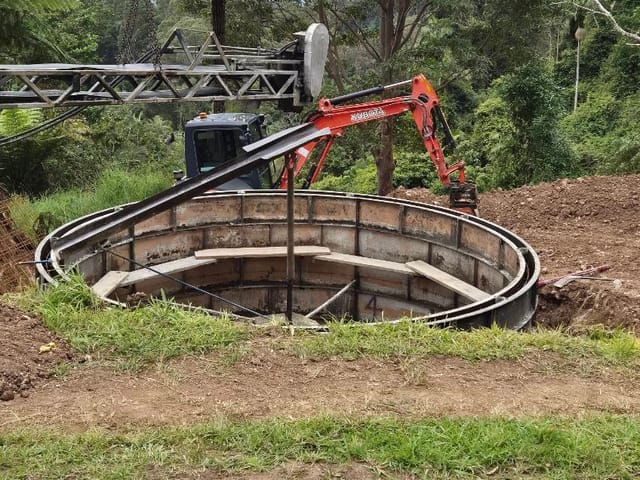
- Owner-operatorLuke, over 10 years operating machinery
- Based in MurwillumbahWorking the Gold Coast to Lennox Head
- Insurance heldLiability and equipment, certificate on request
- Google 5.0 out of 5From 2 reviews, October 2026
- ABN 58 346 068 875Registered business name DIRT WERKS
Jobs Luke takes on in Piggabeen
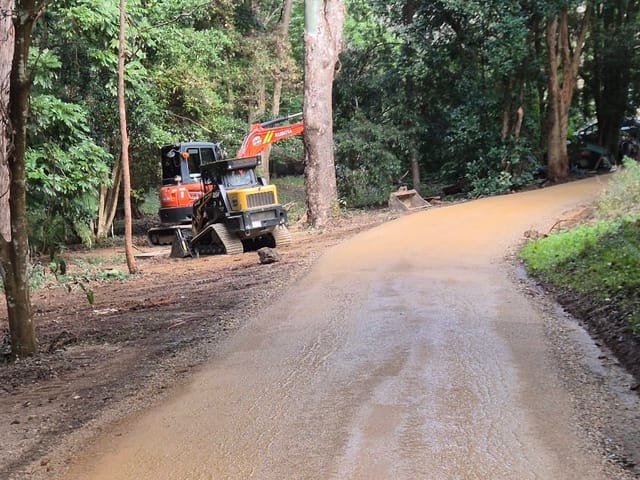
Driveway repairs
Acreage drives run a long way from the road, and potholes there slow every trip. Luke patches the potholes, re-sheets the length of the drive from the Fuso, and spreads the gravel with the posi-track before it is watered and rolled.
See more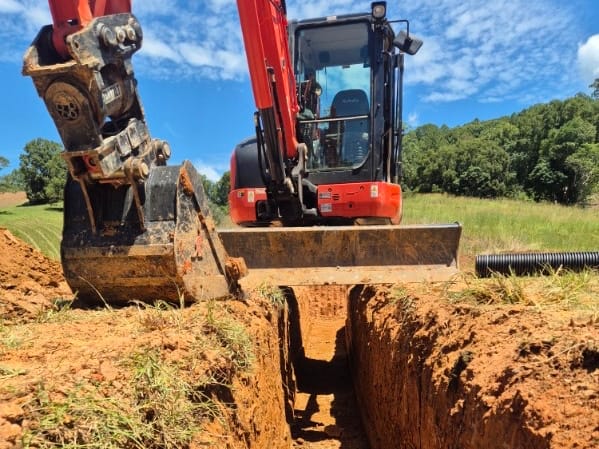
Trenching and drainage
Ag drains, table drains and culverts for wet paddocks and drives, dug and laid by Luke on rural land. House water and power lines are the exception: Luke's machine work stops at the trench, and a licensed plumber or electrician lays and connects.
See more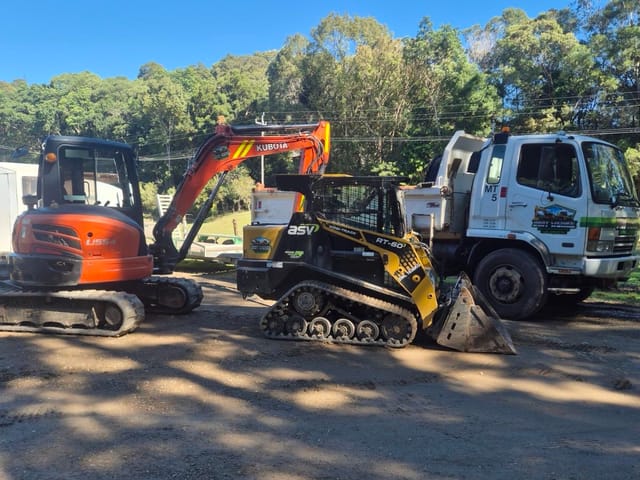
Excavator hire
Hobby-farm fencing, stock yards and gateways need a lot of post holes. The Kubota's auger drills them with Luke at the controls, ready for timber posts or concrete.
See more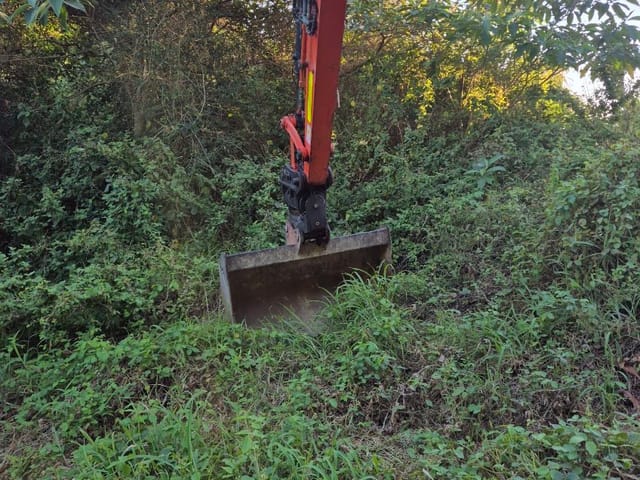
Land clearing
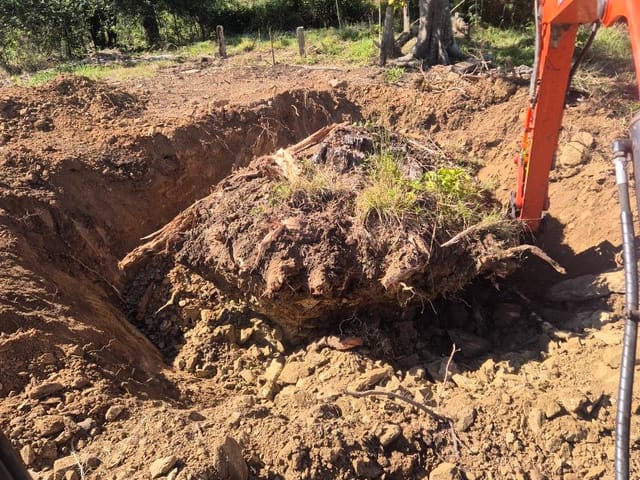
Paddocks that were once dairy country can hold old stumps, tired fencing and regrowth. If the owner wants them gone, the Kubota lifts stumps and strainer posts and the grab sorts the timber into a pile or onto the Fuso.
See moreGround and access in Piggabeen
Piggabeen Creek runs through the locality and, with Cobaki Creek, feeds Cobaki Broadwater in the lower Tweed estuary. Piggabeen and its valley are part of the old Tweed Shield Volcano. The NSW groundwater notes say soils weathered from the Tweed's volcanic flows sit on plateaus and steeper slopes and usually drain well, while floodplain soils are estuarine sediments and alluvium. The ground can change between a slope and the creek flat, so say where on the block the work is.
Acreage gates, cattle grids, creek crossings and long gravel drives decide which machine comes in first and where the tipper can turn. Send photos of the front gate with a tape across it, the drive, any crossing on the way, and the paddock or yard where the work is. Mark fences, water lines and power runs to sheds that you know about.
Before you dig in Piggabeen
Piggabeen is in the Tweed Shire Council area. These rules are worth checking before the machine is booked. Luke lodges his own Before You Dig enquiry for every job.
| Check | What it means |
|---|---|
| Acid sulfate soils on low ground | Tweed Shire Council says acid sulfate soils are common along the Tweed Coast. Written approval is needed in most cases before they're disturbed, and Council's management plan for minor works can't be used where groundwater is likely to be disturbed or dewatering is likely. Those jobs need a site-specific plan. |
| Bringing in fill | Council says filling land needs development consent in most cases. On flood-prone land, get a Section 10.7 certificate and a Property Flood Report for your lot before any fill is ordered, because flood planning levels change as flood studies are updated. |
| Trees and clearing | On non-rural land, clearing declared vegetation needs Council approval, which is free to lodge. That includes native plants 4 m or taller or 10 cm or more in diameter, any tree 40 cm or more in diameter, preferred koala food trees and threatened species. On rural RU1 and RU2 land, clearing native vegetation may need approval under the Local Land Services Act 2013. |
| Driveways and the road reserve | Any work in the road reserve, including a driveway across the verge or a kerb and gutter change, needs Council consent under section 138 of the Roads Act 1993 before it starts. |
| Near creeks and the estuary | To count as exempt development, earthworks must be at least 40 m from natural water and must not redirect water or carry sediment onto a neighbour's land. Work on waterfront land can also need a controlled activity approval from NSW Water. |
| Fire ants | Parts of the Tweed are in the NSW fire ant biosecurity zone. Earthmoving machinery must be cleaned free of soil before it leaves, and soil, fill and quarry products moved out of the area follow set rules. Zones change, so check the current NSW DPIRD maps. |
How it works
From a photo to a finished job
Call or text Luke a photo
A wide shot, the gate or access, and the exact spot tells him most of what he needs.
Get a free quote
From your photos, or from a quick site look if the job needs it. No charge for either.
Book a day
Luke brings the right machine for the access and the job.
Dig, cart and clean up
Spoil goes out on his own tipper. The site is left tidy.
Got a job in Piggabeen?
Call Luke, text him a photo of the site, or send the details through the quote form. Quotes are free.
Questions about earthworks in Piggabeen
Can you put a culvert where my drive crosses a gully?
Yes. On NSW rural land Luke digs the crossing, lays the culvert pipe himself, backfills over it and sheets the top with gravel. Size the pipe for what the gully carries in heavy rain, not on a dry day, and ask neighbours how high the water has come. Send photos of the gully in a wet spell if you have them, plus both banks where the crossing will sit.
Does Tweed Shire Council need to approve my earthworks?
It depends on the job. Small earthworks can be exempt development if they meet the NSW standards, such as staying at least 40 m from natural water and not sending water or sediment onto a neighbour. Fill, acid sulfate soils, flood-prone land, trees and work in the road reserve each have their own approvals. Check with Council on 02 6670 2400 before the machine is booked.
Suburbs near Piggabeen
Luke works right across the area. Pick a neighbouring suburb, or see all of Tweed Heads.
Sources (checked October 2026)
- Wikipedia: Piggabeen
- NSW DCCEEW Water: Tweed catchment snapshot
- NSW Department of Land and Water Conservation: Tweed-Brunswick groundwater vulnerability map explanatory notes (PDF)
- Tweed Shire Council: acid sulfate soils
- Tweed Shire Council: disposal of fill
- Tweed Shire Council: trees on private land
- Tweed Shire Council: driveway access to property guide (PDF)
Related
Tweed Heads
Excavator, posi-track and tipper work in Tweed Heads, Banora Point and Terranora: trenching, driveways, soil removal.
See more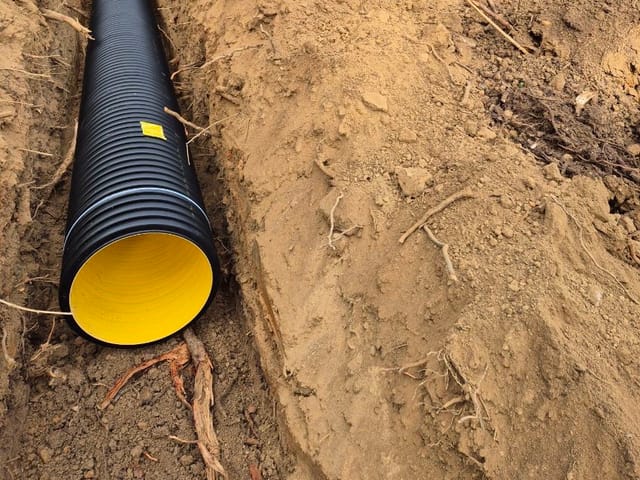
Driveway repairs
Potholes, washouts and worn gravel fixed: regrading, re-sheets and base prep for sealing. Tweed Valley and coast.
See moreTrenching and drainage
Trenching for plumbing, power and drainage, Gold Coast to Lennox Head. Before You Dig checked, dug to grade, backfilled.
See more